


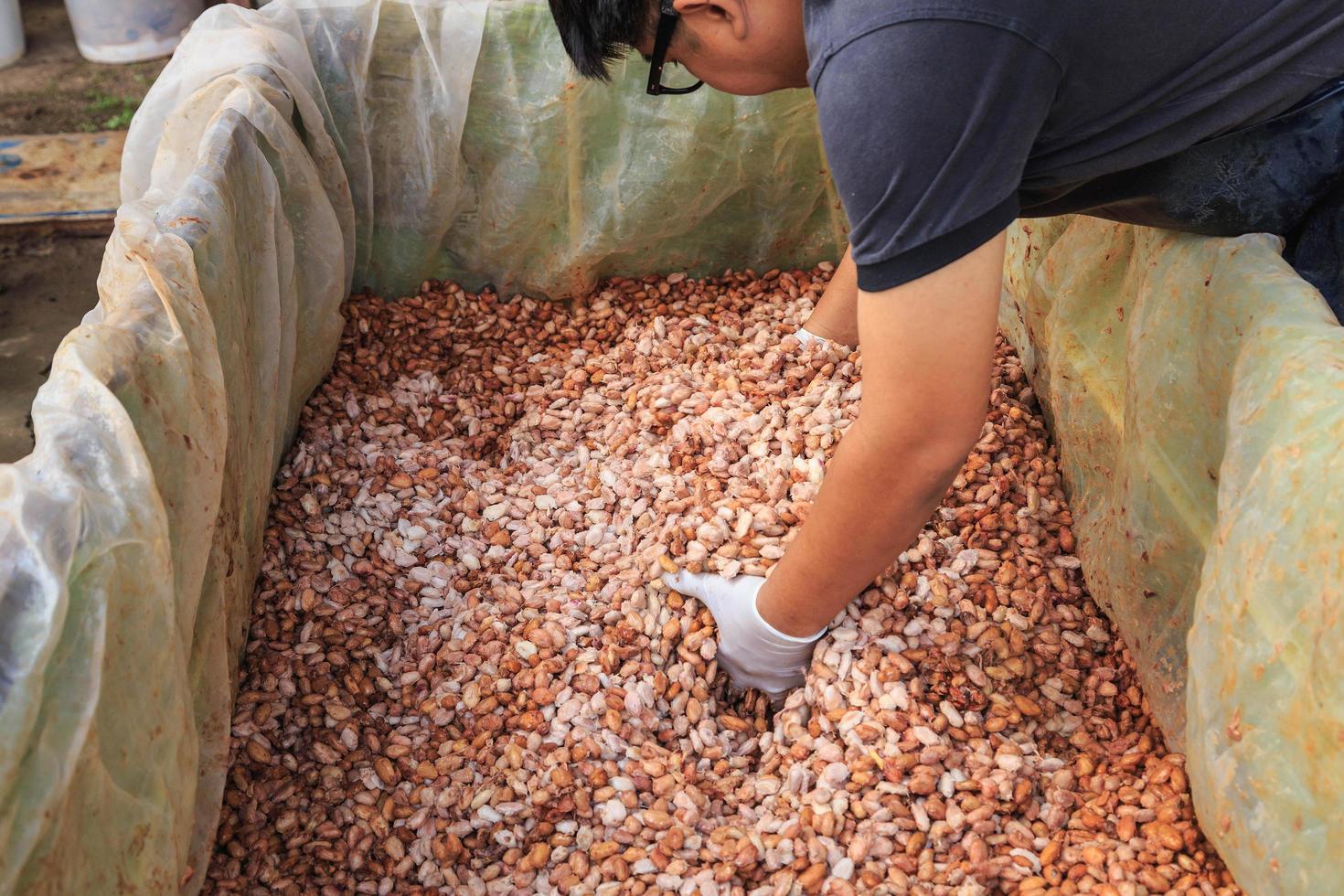
Controlled Fermentation
Along with cacao genetics, fermentation is one of the factors that most strongly influences the bean’s final aroma and flavor profile. At COOPAECA, this process takes place under controlled time, temperature and turning conditions in wooden boxes specifically designed to promote uniform fermentation.
Why every variable is controlled
During fermentation, yeasts and bacteria transform the sugars in the mucilage surrounding the beans, creating the precursors of chocolate flavor. If the process is too short, the beans remain astringent; if it runs too long, undesirable notes develop. The technical team therefore monitors the internal temperature of the cacao mass daily and turns it at precisely scheduled times.
The results are directly reflected in commercial value: a properly fermented lot has a uniform brown color, a clean aroma and fewer defects—qualities that fine cacao buyers verify before concluding any negotiation.
Stages of the process
- Filling boxes with freshly extracted wet beans.
- Scheduled turning to aerate and homogenize the mass.
- Temperature control throughout the fermentation cycle.
- Sensory and cut-test evaluation before drying.
This disciplined post-harvest handling is one reason the cooperative’s cacao can enter export markets with more demanding quality requirements.